Ecocide laws being accepted

I have written about Ecocide previously, here and here. Below is the organization’s most recent email.

There’s so MUCH amazing news,
we recommend you VIEW IN BROWSER
In a world that often feels like it’s unravelling, here’s some genuinely good news: the legal architecture to protect our planet is being built, brick by brick, across multiple continents.
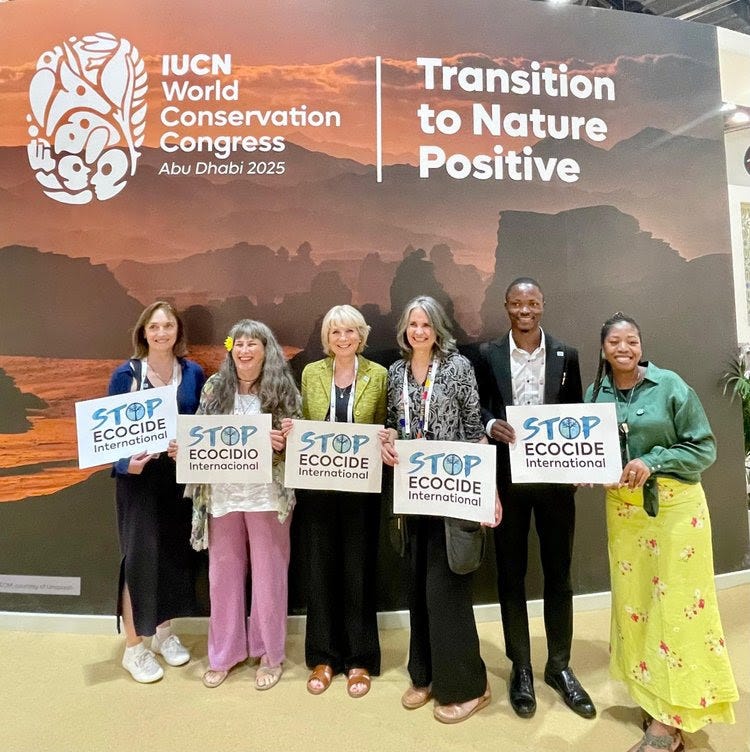
Last week at the World Conservation Congress in Abu Dhabi, the International Union for Conservation of Nature (IUCN) - the body behind the extinction Red List - voted to adopt Motion 061, calling on governments to recognise ecocide as a serious crime. The motion passed with a clear majority among IUCN member states and government agencies, and an overwhelming majority among NGOs and Indigenous Peoples’ organisations.
The vote means IUCN, a globally influential body whose resolutions often shape national and international environmental policy, has formally called for recognition of ecocide as a serious crime under both national and international law.
GLOBAL ADVOCACY
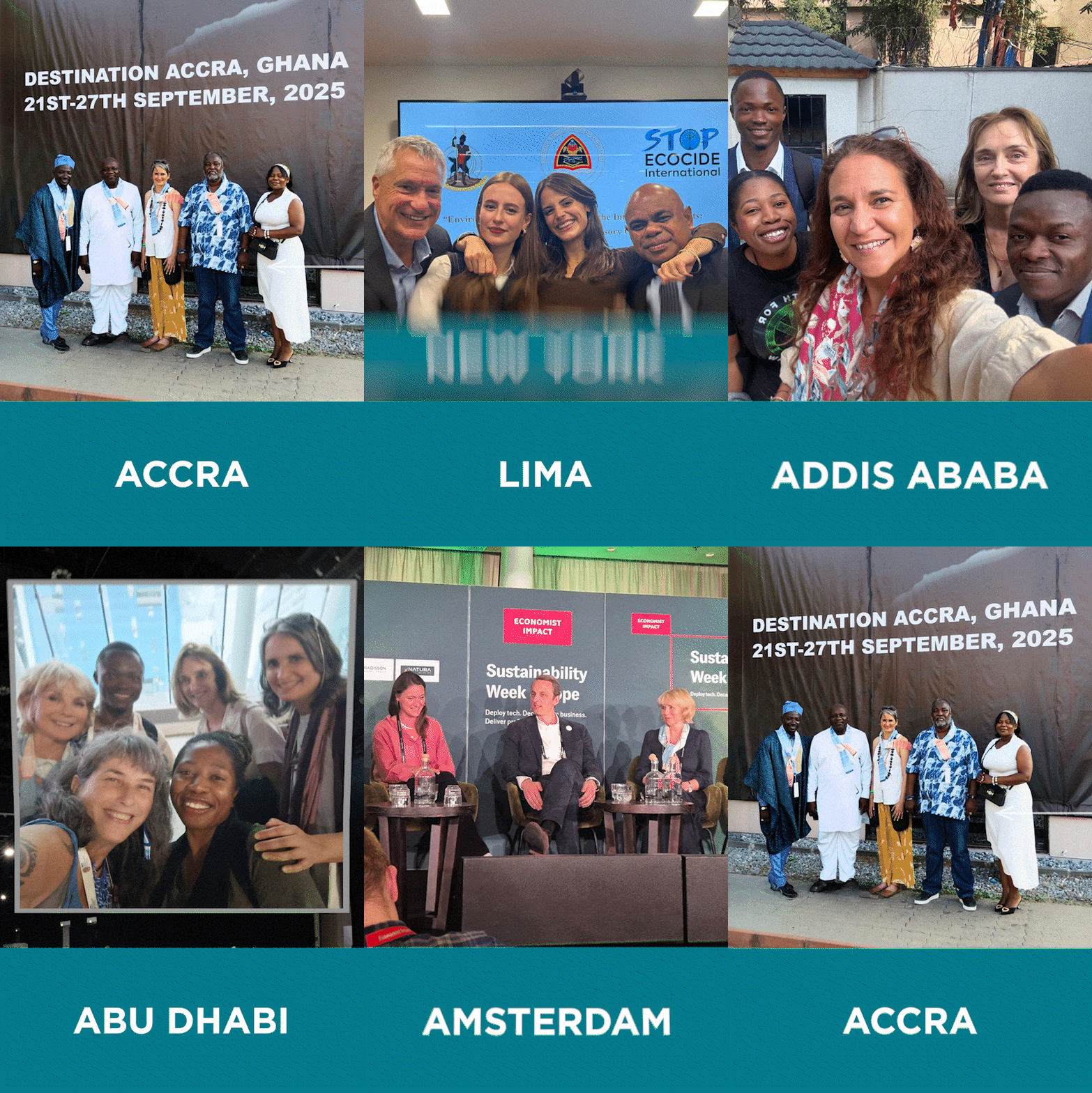
Recent weeks have taken the team across four continents, from Accra to Abu Dhabi, New York to São Paulo, meeting the movement where it’s emerging as ecocide law becomes part of the essential policy conversation.
BREAKING NEWS SUMMARY
Sun, Oct 19
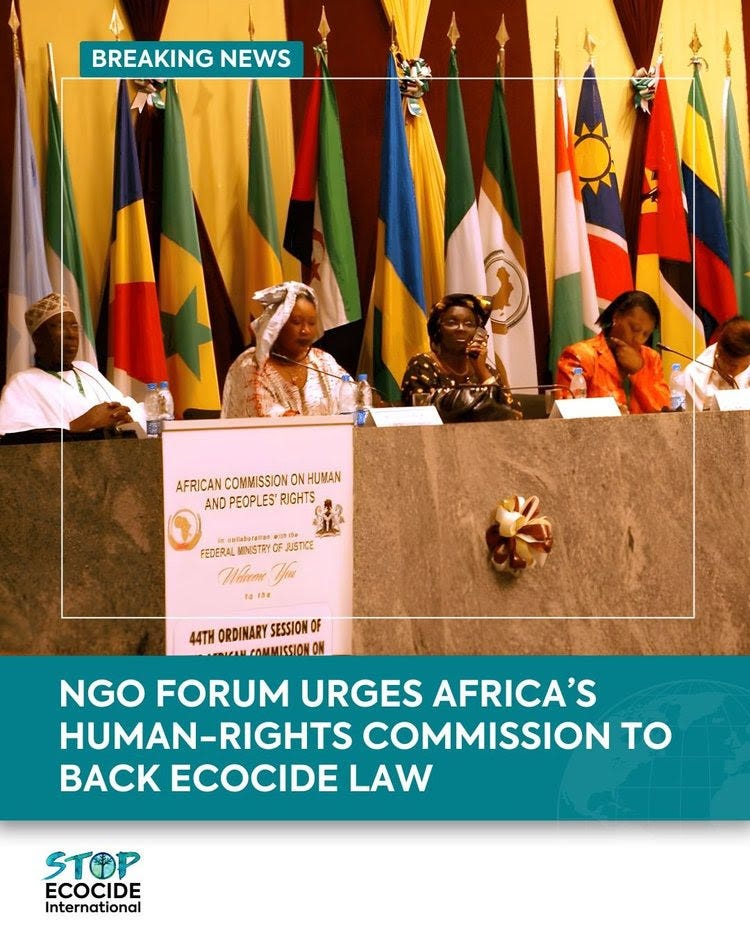
The Forum on the Participation of NGOs (“NGO Forum”) held ahead of the 85th Ordinary Session of the African Commission on Human and Peoples’ Rights (ACHPR) has adopted a civil-society resolution urging the Commission to support recognition of ecocide, defined in the resolution (drawing on the work of the Independent Expert Panel, 2021) as ‘unlawful or wanton acts committed with knowledge that there is a substantial likelihood of severe and either widespread or long-term damage to the environment’. The resolution also encourages African states to strengthen domestic legal protections.
Fri, Oct 17
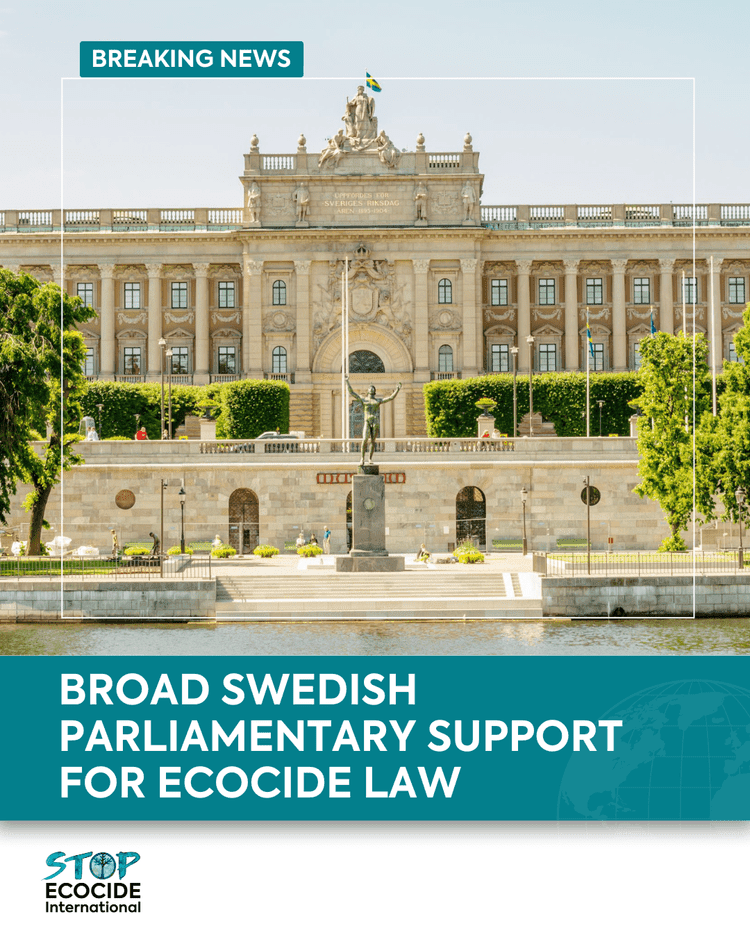
Representatives from all Sweden’s non-government parties have submitted private member’s bills calling for ecocide to become an international crime, demonstrating remarkable cross-party agreement on environmental protection.
All parties in opposition— Sweden’s largest political party the Social Democrats, the Centre Party, the Green Party, and the Left Party—have proposed adding mass environmental destruction to the Rome Statute, and a member of the Liberals, from the governing coalition, proposes trials for crimes, including ecocide, committed during the war in Ukraine.
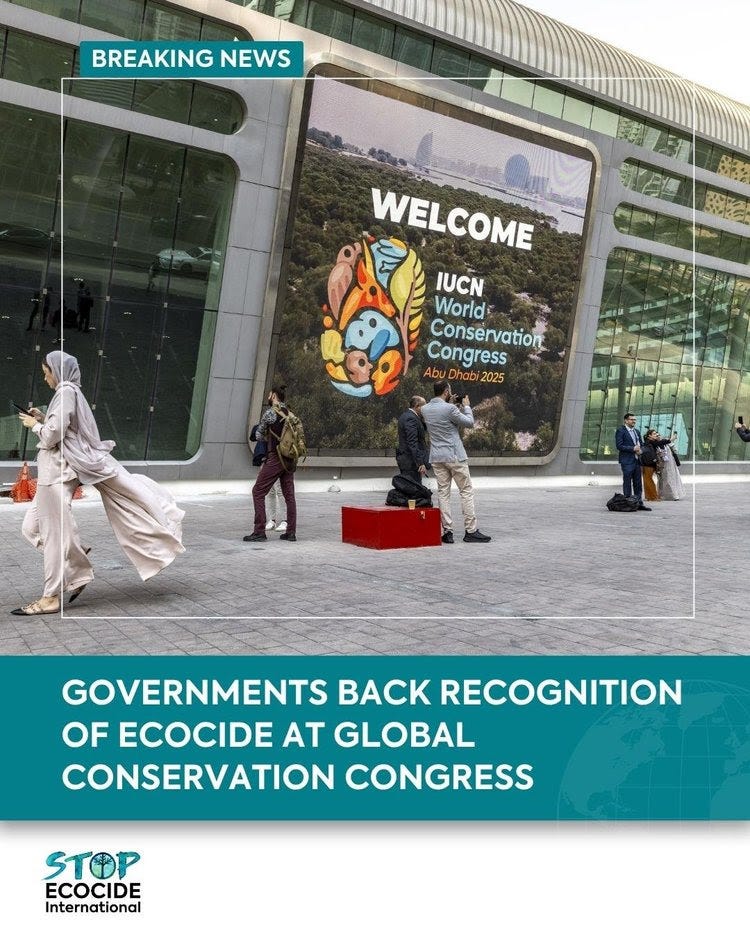
Thu, Oct 16
At its World Conservation Congress in Abu Dhabi (9-15 October), the International Union for Conservation of Nature (IUCN), the world’s largest and most diverse environmental network, comprising more than 1,400 member organisations including states, government agencies, civil society groups and Indigenous Peoples’ organisations, has voted to adopt Motion 061, “Recognising the crime of ecocide to protect nature.”
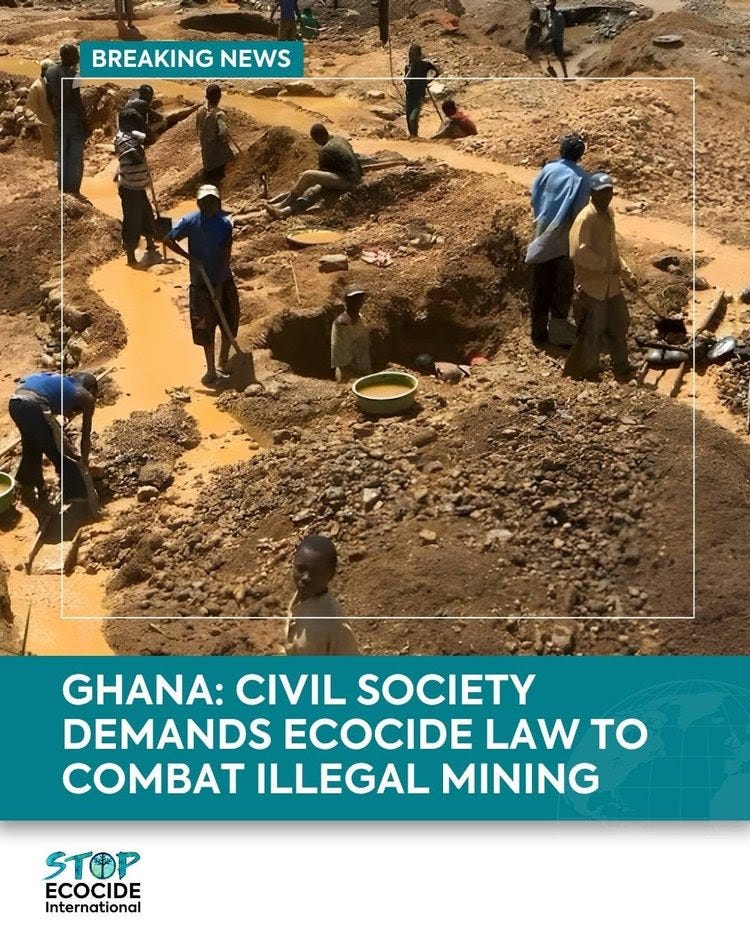
Fri, Oct 3
A coalition of Ghanaian civil society organisations has issued an urgent call to President John Dramani Mahama to take immediate action against what they describe as an ongoing “ecocide” driven by illegal gold mining (galamsey) in the country.
The detailed letter from the Ghana Coalition Against Galamsey, representing organisations including OneGhana Movement, A Rocha Ghana, Peasant Farmers Association of Ghana, Ghana Institution of Engineering, University Teachers Association of Ghana (UTAG), and more than 20 others, presents evidence from nonprofit Pure Earth and Ghana’s Environmental Protection Agency showing mercury, arsenic, and lead contamination across Ghana’s water, soil, and food systems.
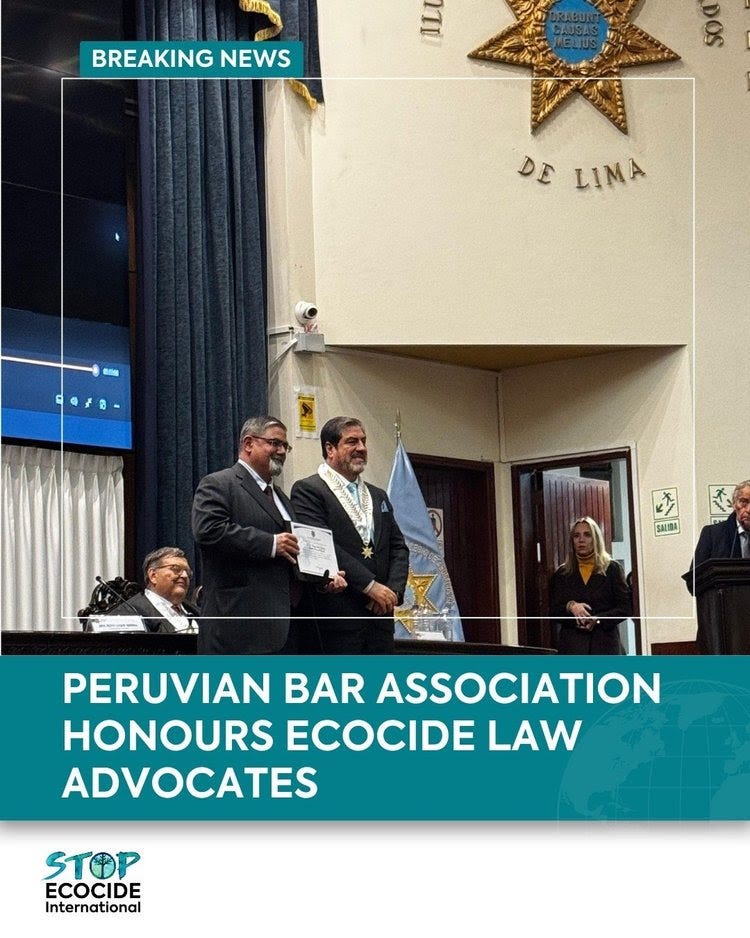
Fri, Sep 26
The Ilustre Colegio de Abogados de Lima (Lima Bar Association) has placed the legal recognition of ecocide at the center of its highest civic distinction, the Medalla Cívica del Derecho (Civic Medal of Law), by awarding the medal to Jojo Mehta, CEO and co-founder, and Rodrigo Lledó Vásquez, Americas Director, both of Stop Ecocide International.
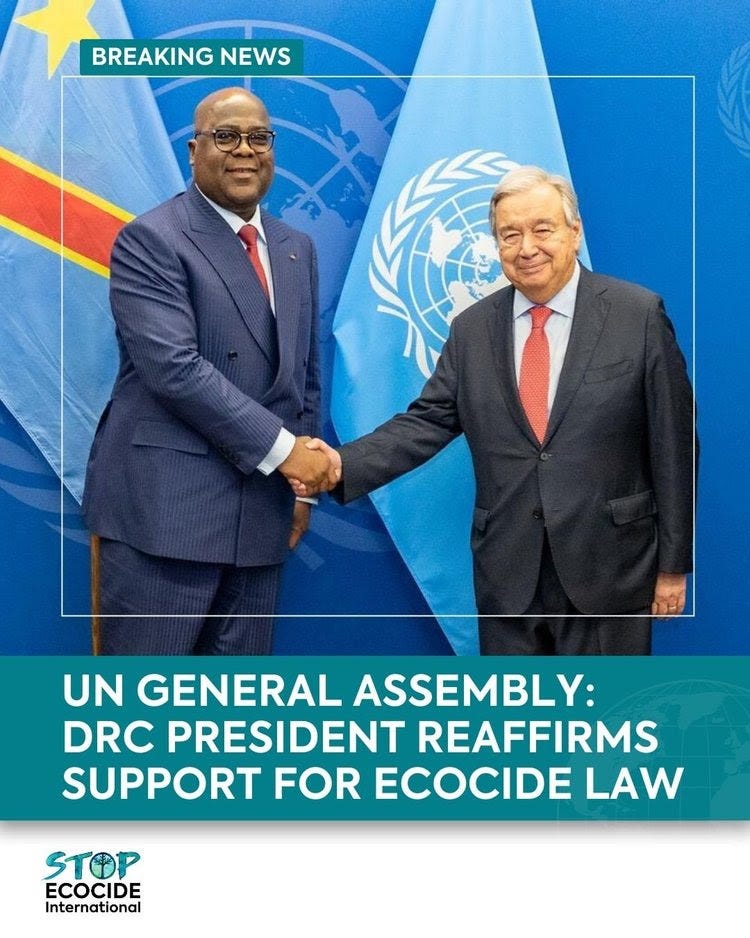
Tue, Sep 23
In a landmark address to the 80th Session of the United Nations General Assembly in New York, President Félix-Antoine Tshisekedi Tshilombo of the Democratic Republic of the Congo reaffirmed his country’s formal support for recognising ecocide as a crime under the Rome Statute of the International Criminal Court (ICC).
Mon, Sep 8
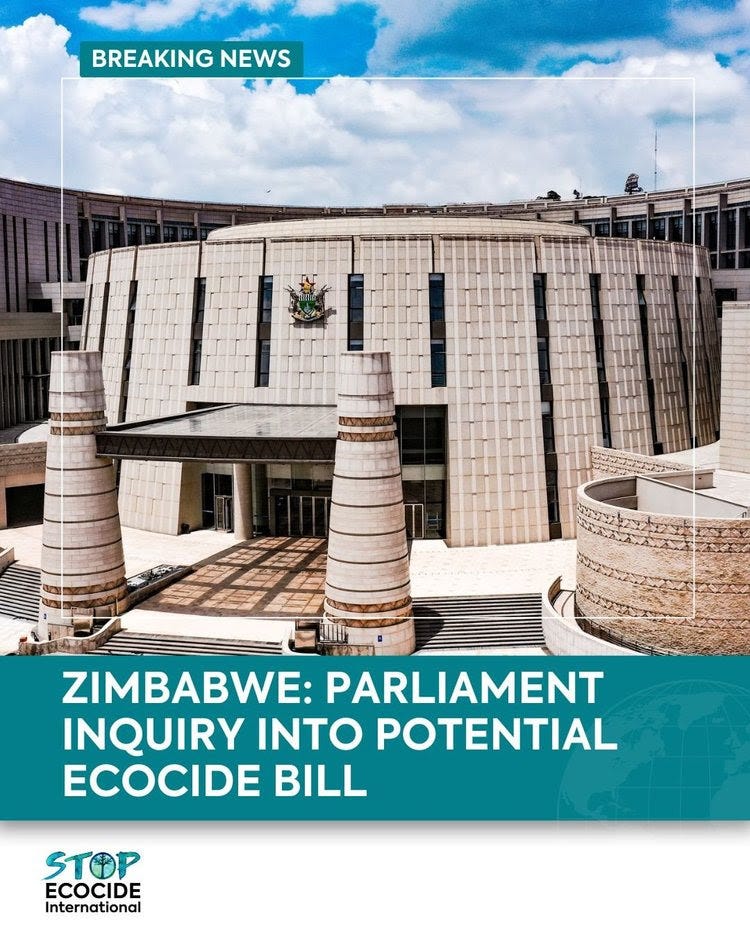
Zimbabwe’s Parliamentary Portfolio Committee on Environment, Climate and Wildlife has launched a formal inquiry in response to a petition [link to petition] by Kwekwe-based human rights and environmental defender Emmanuel Nkosilathi Moyo calling for the country to criminalise ecocide.
Wed, Jul 23
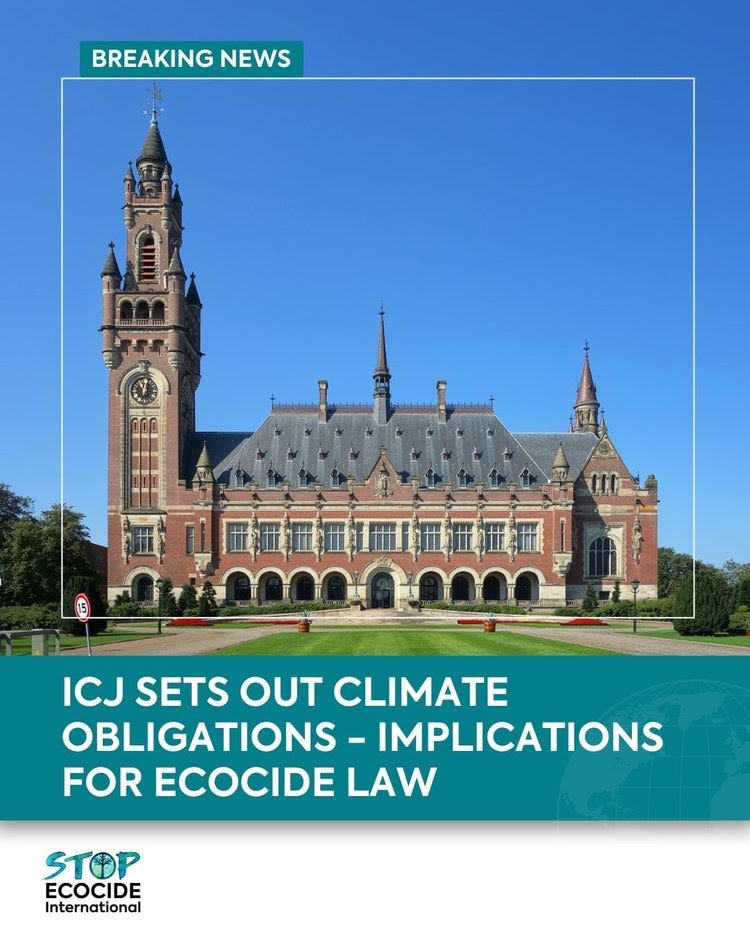
In a landmark advisory opinion, the International Court of Justice (ICJ) has clarified that states have binding legal obligations under international law not only to protect the climate system and the environment, but also to prevent harm, cooperate across borders, and provide reparations where damage occurs.
Thu, Jul 17
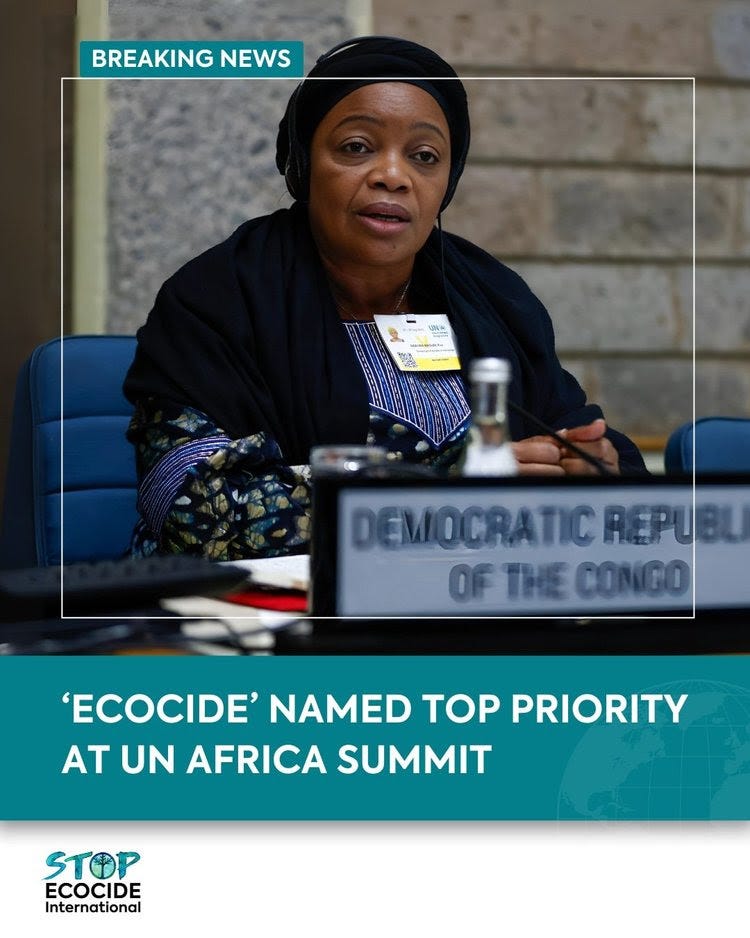
African environment ministers have formally agreed to include ecocide in the continent’s environmental priorities for the 2025–2027 biennium. The decision, confirmed by H.E. Dr. Abu Bakr Al-Harim, Libya’s Minister of Environment and current President of the African Ministerial Conference on the Environment (AMCEN), was taken at the 20th Ordinary Session of the conference and marks the first time ecocide has been explicitly recognised as a strategic continental priority by a UN forum.
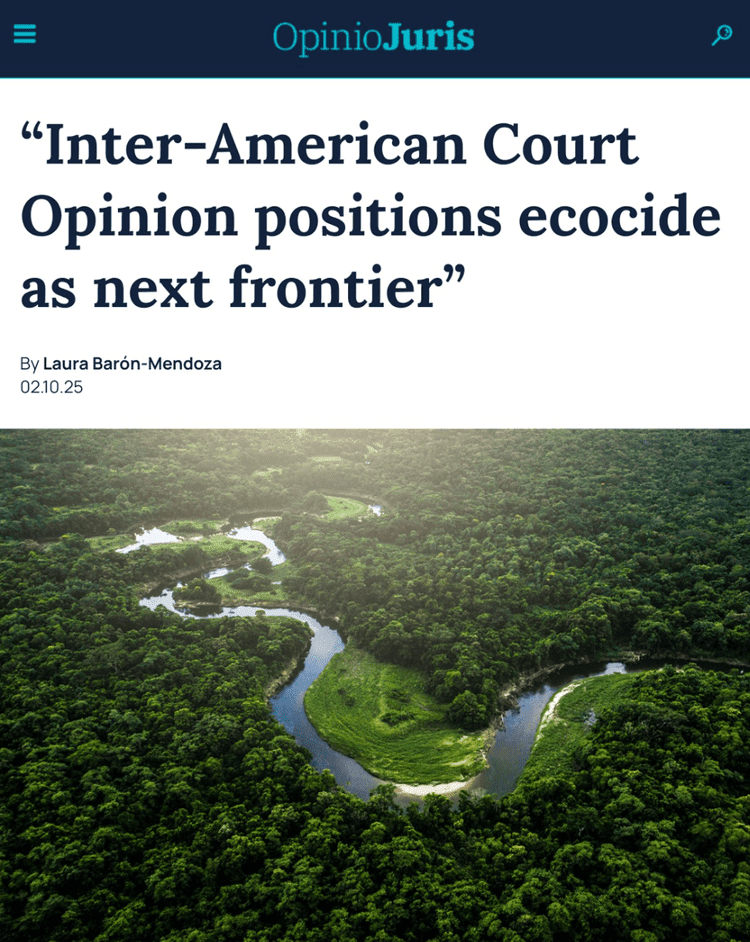
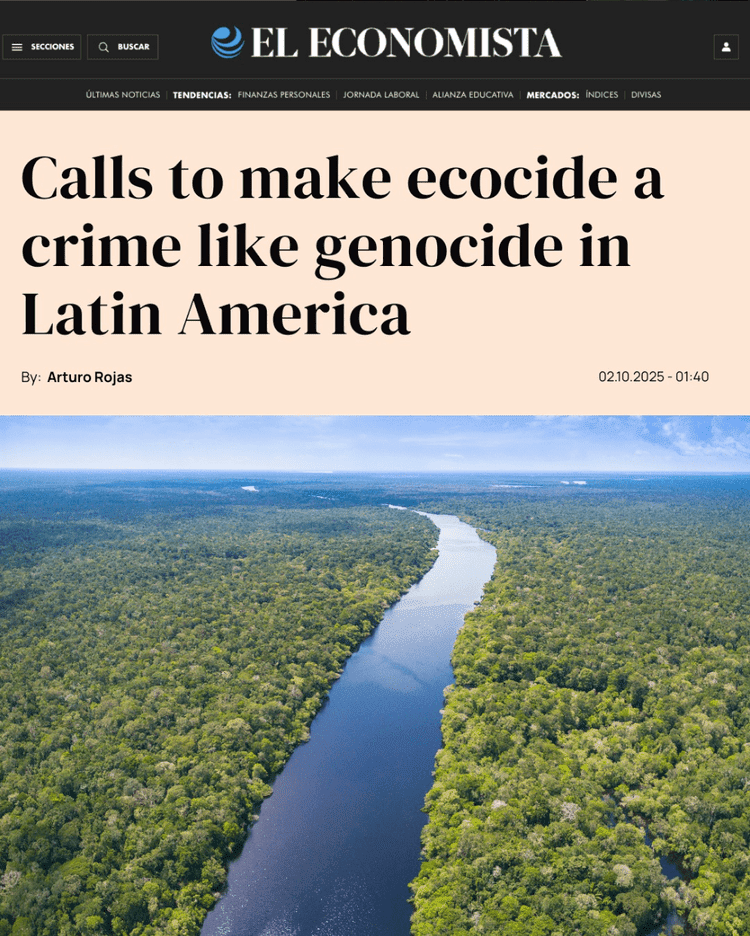
IN THE MEDIA
...
[Message clipped] View entire message

catherine.bryden@akademie-waldorf.de
Displaying 2024_09_27_0363.jpg.